Why Functional Communication Matters
Imagine being unable to ask for help, express discomfort, or say you need a break. For many individuals with autism, this is a daily reality. When communication is limited, frustration often leads to behaviours that are misunderstood or labelled as challenging. Functional Communication Training (FCT), a key component of Applied Behaviour Analysis (ABA), is designed to change that narrative.
Whether you’re a parent, NDIS participant, or support professional, understanding functional communication in ABA Therapy is essential. It empowers individuals with autism to replace difficult behaviours with meaningful communication, enhancing their independence and quality of life.
What Is Functional Communication in ABA?
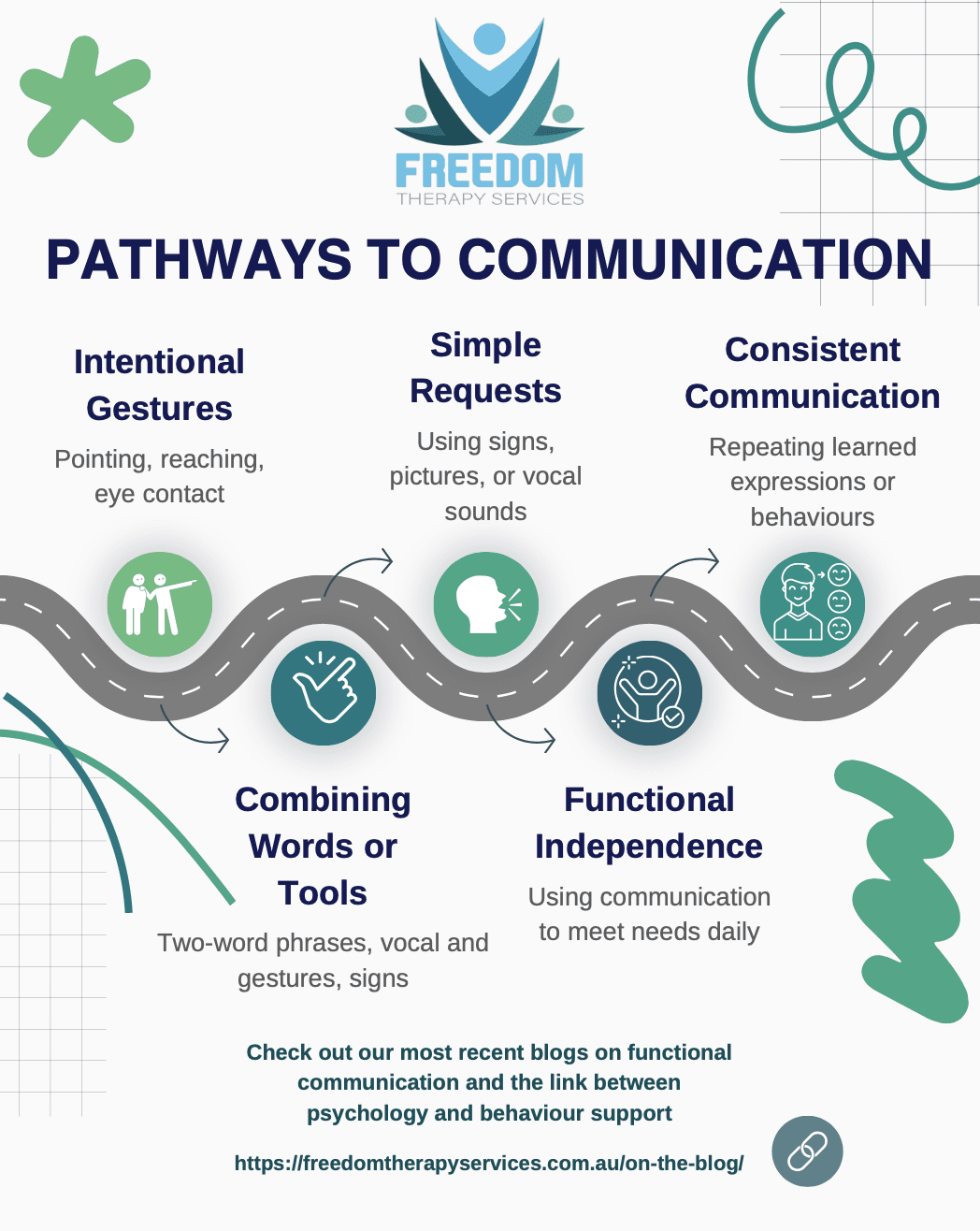
Functional Communication involves using appropriate, understandable methods to express basic wants, needs, and feelings. In ABA Therapy programs, this approach teaches alternative communication strategies to reduce behaviours that serve the same function.
For example, a child who hits to avoid a task might learn to say or sign “break please” instead. The aim is not only to develop language but also to foster purposeful, socially acceptable communication that effectively meets their needs.
Why Functional Communication Is Crucial in Behaviour Support
In Behaviour Support services, FCT serves as a proactive method. It does not suppress behaviour. Instead, it equips individuals with the tools to communicate in ways that others can understand and respond to effectively.
The benefits include:
- Reducing frustration-related behaviours
- Supporting emotional regulation
- Promoting inclusion in home, school, and community settings
- Strengthening relationships with caregivers and peers
This approach aligns with the goals we have for Specialist Behaviour Support and Early Behaviour Intervention, targeting developmental windows where communication skills have the greatest impact.
How ABA Therapy Teaches Functional Communication
Functional Communication Training is always tailored to the individual. Behaviour therapists and Specialist Behaviour Support practitioners start by identifying the function of challenging behaviour—what the person is trying to achieve.
They then design interventions using:
- Visual supports (like PECS)
- Augmentative and Alternative Communication (AAC) devices
- Sign language or gesture-based cues
- Spoken language prompts
Throughout structured sessions and real-life environments, individuals learn to:
- Request items
- Ask for help
- Reject unwanted situations
- Seek attention in appropriate ways
Over time, this reduces the need for behaviours such as aggression, eloping, or self-injury, which previously served communication purposes.
The Role of Parent Coaching and Collaboration
Functional communication extends beyond the therapy room. It needs to be practised at home, in school, and in the community.
This is where Parent Coaching for Autism becomes invaluable. Our team empowers caregivers with practical tools and strategies to:
- Recognise and respond to communicative attempts
- Reinforce positive behaviour
- Model appropriate language consistently
By integrating communication methods across various settings, families become active partners in their child’s progress.
FCT in Action: Evidence from the Field
Research consistently supports the effectiveness of Functional Communication Training in reducing challenging behaviours. Carr & Durand (1985) found FCT to be more effective than traditional behaviour reduction methods because it addresses the root cause—the need to communicate.
As part of NDIS Approved Behaviour Support services, FCT is frequently recommended in Positive Behaviour Support Plans. It is especially useful for addressing aggression, non-compliance, or tantrums.
If you would like to read up more about FCT, the Raising Children’s Network is a great start.
Functional Communication Across the Lifespan
Although often introduced during Early Intervention programs, functional communication is vital at all ages. From young children learning their first words to adults striving for independence, communication remains a lifelong skill.
We support:
- Toddlers through play-based communication
- School-aged children through Autism Behaviour Support
- Teens and adults through Behaviour Support for Adults programs
Start Building Communication Today
If your loved one displays signs of frustration, avoidance, or other challenging behaviours, functional communication may be the key.
At Freedom Therapy Services, our experienced NDIS Behaviour Support Practitioners use evidence-based strategies to teach functional communication that works in real life.
Take the next step:
- Book a 1:1 consultation with a Behaviour Therapist
- Join our Parent Coaching for Autism programs
Communication is more than words—it’s the foundation for connection, confidence, and a brighter future.